
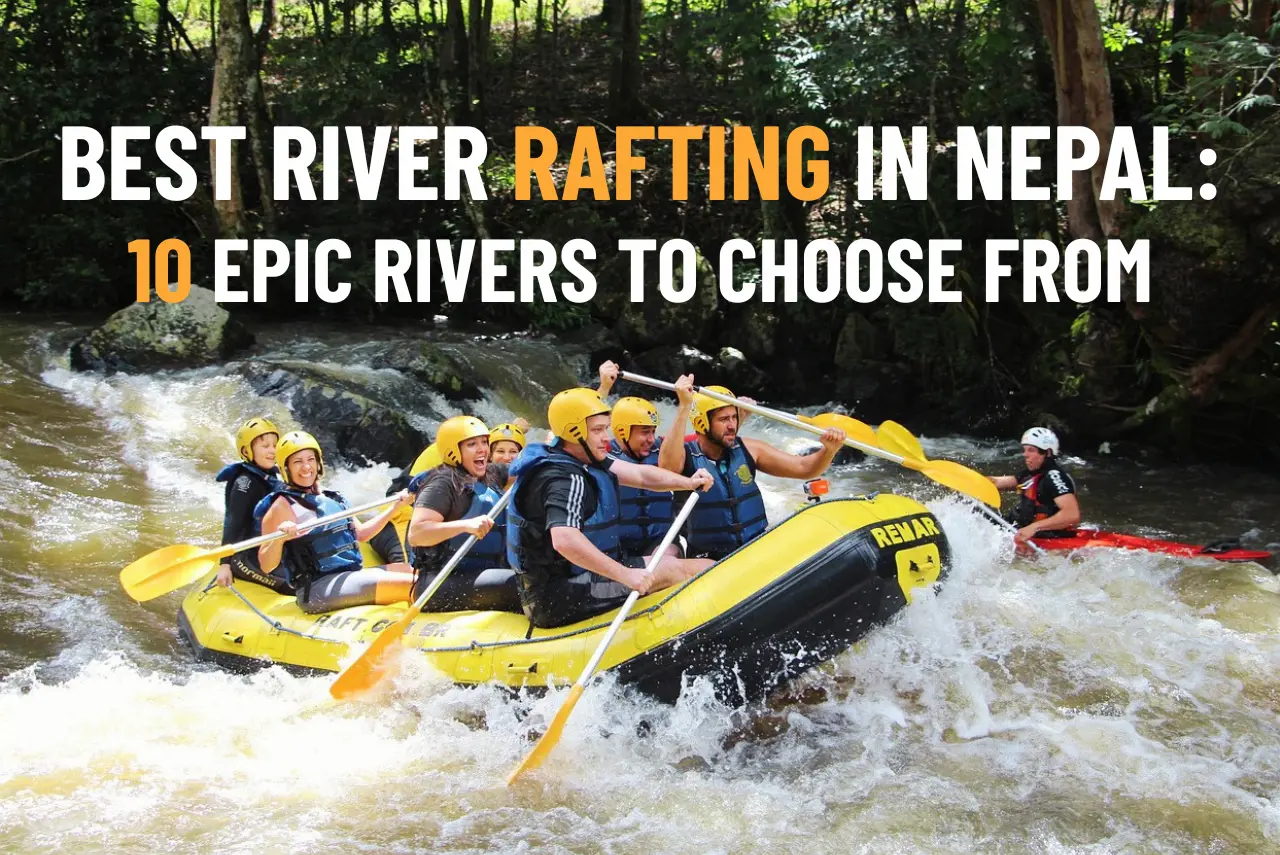
Nepal’s rivers descend from the glaciers of the world’s highest mountains, cutting through some of the most dramatic landscapes on Earth. The result is an extraordinary range of river rafting experiences, from warm, forgiving Grade II day trips on the Trishuli, popular with first-time rafters, to remote 10-day Grade IV–V wilderness expeditions on the Karnali, where the journey is as much about isolation and scenery as it is about whitewater.
There is no single “best” river for everyone. The right choice depends on your rafting experience, how many days you have, where you are traveling from, and what you value most—adrenaline, scenery, cultural encounters, or wilderness.
This article breaks down Nepal’s major rafting rivers by difficulty, trip length, location, scenery, and overall experience, so you can quickly compare your options and choose a river that matches the kind of adventure you’re looking for.
Nepal’s rafting rivers vary dramatically in difficulty, trip length, scenery, and accessibility. This quick comparison shows what distinguishes each major river and the type of rafting experience it is generally suited to.
| River | Typical Grade* | Typical Duration | Best for | Best Season |
| Trishuli | II–III+ | 1–3 days | Beginners, families, short trips | Most of the year |
| Seti | II–III | 1–2 days | Families, beginners, kayaking learners | Most of the year |
| Bhotekoshi | IV–V | 1–2 days | Experienced rafters, high-adrenaline trips | Spring, Autumn |
| Kali Gandaki | III–IV+ | 2–4 days | Scenery, culture, and whitewater | Spring, Autumn |
| Marsyangdi | IV–V+ | 3–5 days | Experienced and expert rafters | Autumn |
| Sun Koshi | III–IV+ | 7–10 days | Classic multi-day expeditions | Autumn |
| Bheri | II–IV | 5–8 days | Wildlife, scenery, and quieter expeditions | Autumn |
| Arun | III–V | 5–8 days | Remote eastern Nepal adventures | Autumn |
| Tamur | IV–V | 10–12 days | Trek-and-raft expeditions | Autumn |
| Karnali | III–IV+ | 10–12 days | Remote wilderness expeditions | Autumn |
Choosing the best river for rafting in Nepal depends on several factors, including your rafting experience, available time, location, preferred type of adventure, and safety considerations.
Nepal offers rivers ranging from accessible sections for first-time rafters to challenging whitewater for experienced paddlers, so choosing a route that matches your needs and experience is important.
Not all rafting rivers and sections in Nepal have the same level of difficulty. If you are new to rafting, consider a river with accessible sections and moderate rapids, such as the Trishuli River.
More experienced rafters may prefer rivers with more technical and challenging whitewater, such as the Bhotekoshi or Marsyangdi, depending on the specific section and current river conditions.
Choosing a route that matches your experience level can help you enjoy the adventure while managing the challenges of the river more comfortably. If you are unsure about which section is suitable, ask your rafting operator about the expected rapid grades and current water conditions before booking.
Your available time and travel itinerary can also help determine which river is right for you. Some rivers are convenient for short rafting trips, while others are better suited to multi-day expeditions.
The Trishuli is a popular option for travelers looking for a relatively accessible rafting experience from Kathmandu or Pokhara.
Seti can be convenient for travelers based around Pokhara, while rivers such as the Kali Gandaki, Sun Koshi, Karnali, and Tamur offer opportunities for longer rafting journeys and more immersive wilderness experiences.
Think about how much time you can dedicate to rafting and how the river fits into the rest of your Nepal itinerary before choosing a trip.
Choose a reputable rafting operator that provides appropriate safety equipment and uses trained, experienced guides. Before booking, ask about the equipment provided, guide experience, safety procedures, emergency arrangements, and the specific river section included in your itinerary.
Professional guides do more than navigate the rapids. They can explain river conditions, help participants follow safety instructions, and provide insight into the surrounding landscapes, local communities, and culture.
Not sure which Nepal rafting river fits your trip? Use this quick guide to narrow down your options based on your experience, location, available time, and the type of adventure you want.
| Your Situation | River to Consider |
| First rafting experience with one day available | Trishuli |
| First rafting experience and staying in Pokhara | Seti |
| Experienced rafter seeking intense whitewater near Kathmandu | Bhotekoshi |
| Want dramatic scenery, whitewater, and multi-day camping | Kali Gandaki |
| Experienced or expert rafter seeking technical whitewater | Marsyangdi |
| Want a classic long-distance rafting expedition | Sun Koshi |
| Want to combine rafting with wildlife and wilderness | Karnali or Bheri |
| Want to combine trekking with rafting | Tamur |
| Traveling with family and looking for a more accessible rafting experience | Trishuli or suitable sections of the Seti |
| Interested in learning kayaking | Seti |
| Want a remote rafting adventure in eastern Nepal | Arun |
Note: These are general starting points rather than fixed rules. River difficulty and suitability can vary depending on the specific section, water level, season, weather, and your group’s experience.
For family trips and higher-grade rivers in particular, confirm the route, difficulty, equipment, and current conditions with a professional rafting operator before booking.
Ultimately, the right river depends on your experience, available time, travel plans, and the type of adventure you want. Whatever river you choose, prioritize appropriate equipment, experienced guides, and current information about river conditions.
If you have only a day or two for rafting, you do not need to commit to a long expedition. Trishuli, Seti, and Bhotekoshi offer three distinctly different short-trip experiences—from accessible introductory rafting to concentrated Grade IV–V whitewater.
Planning note: River conditions, operating sections, road access, and trip availability can change with seasonal water levels, weather, floods, landslides, and other natural events. Always confirm the current river conditions, operating status, and exact rafting section with your operator before booking.
The Trishuli River is one of Nepal’s most accessible rafting rivers and one of the easiest to include in a wider Nepal itinerary.
Located along the Kathmandu–Pokhara travel corridor, it is a convenient option for travelers who want to experience whitewater rafting without committing to a multi-day expedition on a remote river.
The river flows through green hills, gorges, valleys, villages, and agricultural landscapes. Commonly operated sections combine calmer stretches with exciting rapids, making the Trishuli suitable for many first-time rafters while still offering plenty of adventure.
Typical duration: 1–3 days, depending on the section and itinerary
Typical difficulty: Grade II–III+, depending on the section and river conditions
Best for: First-time rafters, short trips, families on suitable sections, and travelers combining rafting with Kathmandu, Pokhara, or Chitwan
Main highlights: Accessible location, exciting rapids, gorges, villages, and riverside scenery
Main advantage: Easy to incorporate into a broader Nepal itinerary
The Trishuli’s biggest advantage is its accessibility. Depending on your travel plans, a rafting trip can fit naturally into a journey between Kathmandu and Pokhara or be combined with travel toward Chitwan.
Trishuli rafting offers:
A practical introduction to whitewater rafting for many first-time participants
Convenient access from Kathmandu and Pokhara
Day, overnight, and longer rafting options depending on the section
A mix of calmer stretches and exciting rapids
Opportunities to combine rafting with a broader Nepal sightseeing itinerary
A flexible option for travelers who do not want to dedicate several days to rafting
This flexibility makes the Trishuli particularly useful for travelers who want to add rafting to an existing Nepal itinerary rather than plan their entire trip around a river expedition.
The Trishuli is generally considered one of the more accessible rafting options in Nepal, but the experience can vary according to the section, season, and river conditions.
Families and first-time rafters should choose an appropriate section and follow the advice of their rafting operator.
Experienced rafters seeking sustained technical whitewater may prefer more challenging rivers such as the Bhote Koshi or Marsyangdi.
Before booking, confirm the planned rafting section, expected difficulty, and current river conditions with your operator.
For travelers looking for a convenient first rafting experience in Nepal, the Trishuli is a practical option when its difficulty, duration, and location fit their experience level and itinerary.
The Seti River offers a different short rafting experience from the Trishuli. Flowing through the Pokhara area and passing through deep gorges, it combines relatively accessible whitewater with scenic landscapes associated with the Annapurna region.
For travelers staying in Pokhara, the Seti is particularly convenient when the goal is to experience rafting without dedicating several days to a river expedition. Its shorter format also makes it easy to combine with other activities around Pokhara.
Typical duration: Half-day or day trips, with longer options depending on the section
Typical difficulty: Around Grade II–III on commonly operated sections
Best for: Pokhara-based travelers, beginners, families on suitable sections, and travelers interested in learning basic paddling skills
Main highlights: Deep gorges, scenic landscapes, accessible whitewater, and proximity to Pokhara
Main advantage: A convenient short rafting experience close to Pokhara
The Seti is best suited to travelers who want to add a relatively short river experience to a Pokhara itinerary. Rather than requiring several days on the river, a Seti rafting trip can fit alongside other activities in the area.
Seti rafting offers:
Convenient access for travelers staying in Pokhara
A relatively short rafting experience
Accessible whitewater on commonly operated sections
Scenic river landscapes and deep gorges
An option for beginners on suitable sections
The opportunity to combine rafting with other Pokhara activities
Compared with the Trishuli, the Seti is better viewed as a Pokhara-based river experience rather than simply a shorter version of the same type of trip.
Its appeal comes from the combination of accessibility, gorge scenery, and proximity to one of Nepal’s major adventure destinations.
The Seti is also used for kayaking instruction and practice, making some sections relevant to travelers interested in developing basic paddling and river skills.
The suitability of a particular section or training program depends on water levels, weather, river conditions, and the type of activity being offered.
If kayaking instruction is your main goal, confirm the specific program and section with the operator before booking.
For travelers staying in Pokhara and looking for a shorter rafting experience, the Seti is worth considering when the available section, river conditions, and difficulty match their experience level.
The Bhote Koshi is one of Nepal’s more challenging commercial rafting rivers, offering steep gradients, cold mountain water, and sustained technical whitewater. With Grade IV–V sections, it is better suited to experienced rafters than first-time participants.
The river flows through a narrow mountain landscape, with challenging rapids concentrated into relatively short sections. Unlike rivers that combine long stretches of calm water with sightseeing, Bhote Koshi rafting places greater emphasis on active paddling, rapid navigation, and technical whitewater.
Typical duration: 1–2 days, depending on the operating section
Typical difficulty: Grade IV–V
Best for: Experienced rafters seeking concentrated and challenging whitewater
Main highlights: Technical rapids, steep mountain scenery, and intense whitewater
Main advantage: High-grade whitewater within relatively easy reach of Kathmandu
The main attraction of the Bhote Koshi is the intensity of its whitewater. Its relatively short rafting trips make it an option for experienced adventure travelers who want challenging rapids without committing to a longer expedition.
Bhote Koshi rafting offers:
Intense whitewater within a relatively short trip
Technical rapids suited to experienced rafters
A convenient alternative to longer, more remote rafting expeditions
A strong focus on active paddling and rapid navigation
A high-adrenaline experience within relatively easy reach of Kathmandu
However, the Bhote Koshi should not be chosen solely because of its reputation for challenging rapids. Previous rafting experience, the section being operated, water levels, weather, and current river conditions all affect the difficulty and suitability of a trip.
For someone whose only previous experience is a relatively gentle Trishuli rafting trip, the Bhote Koshi can represent a substantial increase in difficulty. Discuss your experience level with the rafting operator before booking.
Conditions are particularly important on the Bhote Koshi. Flooding and other natural events can affect river access, infrastructure, and which sections operators are able to run.
Before booking, confirm with your operator that the intended section is currently open and appropriate for your experience level and the prevailing river conditions.
For experienced rafters looking for challenging whitewater in a relatively short trip, the Bhote Koshi offers a concentrated rafting experience and a different type of adventure from Nepal’s more accessible rivers.
Book Bhotekoshi River Rafting →
Multi-day rafting changes the experience completely. Instead of spending a few hours on the river, you travel through changing landscapes over several days, camp along riverbanks, and experience sections of Nepal that are difficult to reach by road.
The rivers also become increasingly different from one another. Kali Gandaki combines whitewater with mountain scenery and cultural encounters, Sun Koshi offers a classic long-distance expedition, Marsyangdi focuses on technical whitewater, while Karnali, Tamur, Bheri, and Arun take you deeper into Nepal’s remote landscapes.
Nepal Tourism Board notes that rafting trips in the country range from short outings to expeditions lasting up to two weeks, with remote trips sometimes incorporating trekking to reach the river.
The Kali Gandaki is one of Nepal’s most distinctive rafting rivers, flowing through the dramatic gorge between the Annapurna and Dhaulagiri massifs.
It combines exciting whitewater with steep valleys, forested hillsides, waterfalls, traditional settlements, and culturally significant landscapes.
Unlike shorter rafting trips focused mainly on rapids, the Kali Gandaki offers a more varied experience. Rafters can expect stretches of Grade III–IV+ whitewater, depending on the section and river conditions, interspersed with quieter sections where the scenery and surrounding landscapes take center stage.
Typical duration: 2–4 days, depending on the section
Typical difficulty: Around Grade III–IV+ on commonly operated sections
Best for: Travelers looking for scenery, culture, camping, and whitewater in one trip
Main highlights: Dramatic gorges, waterfalls, forests, traditional settlements, and Himalayan landscapes
Main advantage: A strong combination of mountain scenery and river adventure
The main appeal of the Kali Gandaki is its balance of adventure and exploration. The journey is not limited to continuous whitewater; changing landscapes, quieter river sections, and encounters with rural communities add variety to the experience.
Kali Gandaki rafting can offer:
Exciting whitewater combined with dramatic mountain scenery
Multi-day rafting and camping experiences
Scenic sections through gorges, forests, and waterfalls
Opportunities to experience traditional settlements and local landscapes
A possible addition to a wider Pokhara or Annapurna itinerary, depending on the route and logistics
The river is particularly suitable for travelers who want more than a short introductory rafting trip and prefer a multi-day adventure that combines outdoor activity with scenery and cultural experiences.
The Kali Gandaki can also complement an Annapurna trekking itinerary, although the practicality of combining the two depends on the trekking route, road access, rafting section, and current operating conditions.
If you plan to combine trekking and rafting, check the transportation and trip logistics with your rafting operator before booking, as routes and operating conditions can vary.
For travelers who value scenery, cultural encounters, camping, and whitewater, the Kali Gandaki offers a distinctive multi-day rafting experience in Nepal.
Book Kali Gandaki River Rafting →
The Sun Koshi is one of Nepal’s classic long-distance rafting rivers and one of the country’s best-known expedition-style river journeys.
The traditional expedition covers approximately 270 kilometers from Dolalghat toward Chatara and commonly takes around 8–10 days, making it substantially longer and more immersive than Nepal’s shorter rafting trips.
What distinguishes the Sun Koshi is the progression of the journey. Over several days, the river passes through changing landscapes, with challenging whitewater sections followed by calmer stretches, riverside camping, and long stretches of wilderness travel.
Rather than traveling to a single section of rapids and returning, rafters spend the expedition continuously moving downstream and watching the landscape change around them.
Typical duration: 7–10 days, with classic itineraries commonly taking around 8–10 days
Typical difficulty: Challenging whitewater, with difficulty varying by section, water level, season, and river conditions
Best for: Experienced rafters, expedition travelers, and travelers looking for a long-distance wilderness journey
Main highlights: Long-distance rafting, changing landscapes, riverside camping, challenging whitewater, and wilderness travel
Main advantage: A sustained multi-day river journey where the expedition itself is the main adventure
The Sun Koshi is an option for travelers who want rafting to be a central part of their Nepal adventure rather than a short activity added between sightseeing stops. Its extended route creates a sense of progression that is difficult to replicate on a one- or two-day rafting trip.
A Sun Koshi expedition offers:
One of Nepal’s classic long-distance rafting journeys
Several days of wilderness travel and river exploration
Riverside camping throughout the expedition
A combination of challenging whitewater and calmer river sections
Changing landscapes as the river travels through different parts of Nepal
An opportunity to experience the rhythm of multi-day river travel rather than a single rafting section
A more immersive alternative to short rafting excursions
The length of the expedition is an important part of the experience. Spending a week or more on the river requires more time and commitment than a day trip or short rafting excursion, but it also allows travelers to experience the river at a much slower and more immersive pace.
The Sun Koshi is a serious multi-day rafting experience, and river difficulty can change significantly along the route. Rapids and conditions vary according to the section, water level, season, weather, and current river conditions.
Because of this variation, the experience required can depend on the specific itinerary and conditions during the expedition. Travelers should discuss their previous rafting experience with a professional operator and confirm the planned route, expected difficulty, and current conditions before booking.
The Sun Koshi is particularly suited to travelers who have enough time for a genuine river expedition and want several days of rafting, camping, wilderness travel, and changing landscapes.
For those looking for a long-distance journey rather than a short introduction to whitewater rafting, the Sun Koshi offers one of Nepal’s most distinctive expedition-style river experiences.
The Marsyangdi is one of Nepal’s more demanding commercial rafting rivers, combining technically challenging whitewater with steep mountain terrain and dramatic Himalayan scenery.
Flowing through the Annapurna region, it offers a very different experience from Nepal’s more accessible rafting rivers.
The attraction is not simply the mountain scenery. The Marsyangdi is particularly known for the combination of powerful rapids, steep Himalayan landscapes, and a multi-day river journey.
Nepal Tourism Board lists the Marsyangdi among Nepal’s major rafting rivers, with challenging sections in the Grade IV–V+ range.
Typical duration: 3–5 days, depending on the section and itinerary
Typical difficulty: Grade IV–V+ on challenging sections, depending on the section and river conditions
Best for: Experienced rafters seeking challenging and technical whitewater
Main highlights: Powerful rapids, steep Himalayan terrain, and dramatic mountain scenery
Main advantage: Demanding whitewater combined with a high-mountain setting
The Marsyangdi is suited to travelers who want a more demanding rafting experience in a dramatic Himalayan environment. Its combination of technical whitewater and mountain scenery makes it distinct from both shorter introductory trips and rivers where scenery is the primary focus.
Marsyangdi rafting offers:
Challenging and technical whitewater
Dramatic Himalayan and mountain landscapes
A multi-day rafting experience on appropriate sections
A combination of demanding rapids and high-mountain terrain
An option for experienced rafters looking for a more challenging river journey
The Marsyangdi belongs firmly in the experienced-rafter category. Travelers should not assume that a few previous rafting trips automatically prepare them for a high-grade river.
Experience with appropriate whitewater, physical readiness, and familiarity with river safety are important considerations.
The difficulty can also vary considerably depending on the section being operated, water level, season, weather, and current river conditions. Before booking, discuss your previous rafting experience with the operator and confirm that the planned section is appropriate for your group.
For experienced rafters whose priority is technical whitewater in a dramatic Himalayan setting, the Marsyangdi offers a demanding alternative to Nepal’s shorter and more accessible rafting rivers.
The Karnali offers a very different rafting experience from the more accessible rivers around Kathmandu and Pokhara. Flowing through western Nepal, the river takes rafters deep into relatively remote landscapes where wilderness, isolation, and multi-day river travel become central parts of the adventure.
The river combines substantial whitewater with long stretches through sparsely developed landscapes. Multi-day journeys involve riverside camping and changing scenery, making the journey itself as important as the rapids.
For travelers willing to spend additional time reaching western Nepal, the Karnali offers a genuine expedition-style experience far removed from the country’s more accessible rafting routes.
Typical duration: Around 10–12 days, depending on the itinerary
Typical difficulty: Grade III–IV+ on commonly described sections, depending on the route and river conditions
Best for: Experienced rafters, wilderness travelers, and expedition seekers
Main highlights: Remote landscapes, substantial whitewater, riverside camping, and western Nepal’s wilderness
Main advantage: A remote expedition experience combining wilderness and whitewater
The Karnali is particularly suited to travelers who want the river journey itself to be a major part of their Nepal adventure. Unlike rivers close to the country’s main tourist centers, the Karnali takes travelers deeper into western Nepal, where fewer developed areas and longer stretches of wilderness contribute to the expedition atmosphere.
A Karnali rafting expedition offers:
A genuine remote wilderness experience
Substantial whitewater combined with multi-day river travel
Riverside camping and changing landscapes
An opportunity to travel beyond Nepal’s main tourist centers
A longer expedition for travelers with sufficient time
Opportunities to extend a western Nepal itinerary toward the Bardia region
The Karnali also has a connection with the Bardia region, making it possible to combine a rafting expedition with other experiences in western Nepal.
Freshwater Gangetic dolphins can be found in parts of the Karnali River near Bardia National Park, while the surrounding region supports diverse wildlife such as tigers, rhinoceros, crocodiles, and hundreds of bird species.
Depending on the route, season, and itinerary, travelers may be able to combine rafting with a visit to the park or other attractions in western Nepal.
The main consideration with the Karnali is accessibility. Reaching the river requires more time and planning than rafting destinations closer to Kathmandu or Pokhara. The extended duration also means committing a significant part of your Nepal trip to the expedition.
The difficulty can vary according to the specific section, water level, season, weather, and route. Travelers should discuss their previous rafting experience with a professional operator and confirm the planned route and current conditions before booking.
For travelers seeking remote landscapes, wilderness, riverside camping, and substantial whitewater, the Karnali offers an expedition-style rafting experience well beyond Nepal’s more accessible river trips.
The Tamur offers one of Nepal’s most distinctive adventure formats, combining a Himalayan trekking approach with a multi-day rafting expedition. Instead of traveling directly to the river, the journey begins with a trek into eastern Nepal before transitioning into a substantial whitewater adventure.
The river lies in the wider Kanchenjunga region, taking travelers through a relatively remote part of eastern Nepal. The trekking approach provides opportunities to experience mountain landscapes and traditional villages before the rafting section adds challenging whitewater, riverside camping, and a different kind of adventure.
Typical duration: Around 10–12 days, depending on the itinerary and trekking approach
Typical difficulty: Challenging to high-grade whitewater, depending on the rafting section and river conditions
Best for: Experienced adventurers who want to combine trekking and rafting in one trip
Main highlights: Remote eastern Nepal, Himalayan trekking, traditional villages, riverside camping, and challenging whitewater
Main advantage: Combines a Himalayan approach trek with a substantial multi-day rafting expedition
The main appeal of the Tamur is the combination of two distinct forms of adventure. Travelers can experience a Himalayan trekking journey and a serious river expedition as part of the same itinerary, rather than choosing between the two.
A Tamur trek-and-raft expedition offers:
A combination of Himalayan trekking and multi-day rafting
Travel through remote areas of eastern Nepal
Mountain landscapes and traditional villages along the approach
Challenging whitewater on the rafting section
Riverside camping and an extended expedition experience
An itinerary suited to travelers looking for a more demanding adventure
Unlike the more accessible rafting trips in Nepal, Tamur is less about convenience and more about the overall expedition. The approach trek becomes part of the adventure rather than simply a way to reach the river.
The combination of trekking and rafting means Tamur requires considerably more time, preparation, and physical commitment than a standard rafting trip.
It is better suited to experienced adventure travelers who are comfortable with both multi-day trekking and challenging river travel.
The difficulty of the rafting section can vary according to the specific route, water level, season, weather, and current river conditions. Travelers should discuss their previous rafting experience and overall physical preparedness with their operator and confirm the planned itinerary before booking.
For experienced travelers who want to combine Himalayan trekking, remote eastern Nepal, and challenging whitewater in one extended adventure, the Tamur offers a distinctive trek-and-raft expedition experience.
The Bheri River offers a different kind of rafting experience from Nepal’s more demanding commercial rivers. Located in western Nepal and forming part of the Karnali river system, it combines varied whitewater with remote landscapes, riverside camping, and multi-day river travel.
Depending on the section and conditions, the Bheri includes moderate to challenging rapids alongside calmer stretches. This variety makes the river particularly appealing to travelers who want an expedition experience where the surrounding wilderness is as much a part of the journey as the whitewater.
Typical duration: Around 5–8 days, depending on the route and itinerary
Typical difficulty: Grade II–IV, depending on the section and river conditions
Best for: Travelers seeking wilderness, camping, varied whitewater, and a multi-day river journey in western Nepal
Main highlights: Remote landscapes, varied whitewater, riverside camping, and access to western Nepal’s wildlife destinations
Main advantage: A multi-day western Nepal river adventure that can complement a wider wilderness and wildlife itinerary
The Bheri is well suited to travelers who want to experience a less-developed part of Nepal through a multi-day river journey. Its combination of changing river conditions, remote landscapes, and camping creates an expedition atmosphere that differs from shorter commercial rafting trips.
A Bheri rafting expedition offers:
An opportunity to experience the remote landscapes of western Nepal
A varied mix of whitewater and calmer river sections
Multi-day rafting with riverside camping
An alternative to the more accessible rafting routes around Kathmandu and Pokhara
Opportunities to combine rafting with other experiences in western Nepal
A possible connection with a visit to Bardia National Park
One of the Bheri’s attractions is its potential connection with western Nepal’s wildlife destinations. Depending on the itinerary, travelers can combine a river expedition with a visit to Bardia National Park, which is known for wildlife including Bengal tigers, one-horned rhinoceros, crocodiles, and diverse birdlife.
Freshwater Gangetic dolphins can also be found in parts of the Karnali River system near Bardia. This creates an opportunity to make rafting part of a broader western Nepal adventure rather than treating it as a standalone whitewater activity.
The Bheri requires more time and planning than Nepal’s short rafting trips, particularly because of its location in western Nepal. The experience is best suited to travelers who have enough time for a multi-day river journey and want to explore a less-developed part of the country.
The river’s difficulty and suitability depend on the specific section, water level, season, weather, and current conditions. Travelers should confirm the planned route and expected difficulty with their rafting operator and make sure the trip matches their experience level.
For travelers looking for wilderness, riverside camping, varied whitewater, and opportunities to explore western Nepal, the Bheri offers a distinctive multi-day rafting experience.
The Arun River offers a distinctive rafting experience in eastern Nepal, combining challenging whitewater with changing landscapes and a more remote setting.
Originating in Tibet and flowing through eastern Nepal, the Arun forms part of the wider Koshi river system and is recognized by the Nepal Tourism Board as one of Nepal’s rafting rivers.
The river descends from the Himalayan region toward the lower hills and plains, creating a journey through varied landscapes. The Tumlingtar–Chatara corridor is a traditional rafting route, v while the river’s eastern location makes it particularly appealing to travelers who want to explore a less accessible part of Nepal through a multi-day adventure.
Typical duration: Around 5–8 days, depending on the route and itinerary
Typical difficulty: Approximately Grade III–V, varying by section and river conditions
Best for: Experienced rafters and travelers seeking a remote river adventure in eastern Nepal
Main highlights: Remote eastern Nepal, changing landscapes, challenging whitewater, and an expedition-style journey
Main advantage: A multi-day rafting experience that combines eastern Nepal’s landscapes with more demanding whitewater
The Arun is well suited to travelers who want the river journey itself to be a central part of their eastern Nepal adventure. Compared with more accessible rafting destinations such as the Trishuli, reaching the Arun generally requires more planning and a longer itinerary.
An Arun rafting expedition offers:
An opportunity to explore eastern Nepal through a multi-day river journey
Changing landscapes from the Himalayan region toward the lower hills and plains
Challenging whitewater on appropriate sections of the river
An expedition-style experience away from Nepal’s main rafting corridors
A more involved adventure for travelers with previous rafting experience
The opportunity to make the river journey a central part of a wider eastern Nepal itinerary
One of the defining features of the Arun is its location. Rather than being concentrated around Nepal’s main tourism and adventure hubs, the river takes travelers into eastern Nepal, where the journey itself becomes part of the experience.
The changing landscapes along the river add another dimension to the rafting trip. As the Arun descends from the Himalayan region toward the lower hills and plains, the surrounding environment changes throughout the journey.
For travelers interested specifically in eastern Nepal, the additional logistics can therefore be part of the attraction. The Arun provides an opportunity to experience the region through a river expedition rather than simply adding a short rafting activity to a Kathmandu- or Pokhara-based itinerary.
The Arun is better suited to experienced rafters and travelers who are comfortable with a longer, more involved adventure. Its remote location and the logistics required to reach the river mean that the trip generally requires more planning than rafting routes closer to Nepal’s major travel centers.
The river’s difficulty can vary considerably depending on the specific section, water level, season, weather, and current conditions. Travelers should discuss their previous rafting experience with a professional operator and confirm the planned route, accessibility, and expected difficulty before booking.
For experienced rafters and adventurous travelers who want to explore eastern Nepal through a multi-day river journey, the Arun offers a distinctive alternative to Nepal’s more accessible rafting routes.
For most rafting rivers in Nepal, autumn (October–November) offers the most reliable combination of favorable water levels, clear weather, and mountain views. Spring (April–May) is another good period, while river conditions become more variable during the monsoon.
| Season | Months | General Conditions |
| Spring | March–May | Good; water levels generally rise through April and May |
| Monsoon | June–August | High and fast-flowing water; many rafting trips are suspended |
| Autumn | September–November | Generally the most popular period, with strong but increasingly manageable flows |
| Winter | December–February | Lower water levels and colder conditions; shorter trips may still operate on selected rivers |
The best season also depends on the river and the section being rafted. Higher-altitude and higher-grade rivers can respond differently to changing water levels, so check current conditions with your operator before booking.
For a detailed month-by-month breakdown, see our Best Time for River Rafting in Nepal guide.
Rafting does not have to be a standalone activity in Nepal. Several rivers fit naturally into popular trekking, wildlife, and city itineraries, making it possible to add a rafting experience without building your entire trip around the river.
Nepal offers several ways to combine trekking with rafting. The Tamur is the most direct example, with a trekking approach followed by a multi-day rafting expedition. Kali Gandaki can also complement an Annapurna itinerary, depending on the route and current rafting operations.
Best for: Travelers who want a longer, more active adventure combining Himalayan trekking and whitewater.
The Trishuli is particularly convenient for travelers heading toward Chitwan. Depending on the rafting section and road conditions, you can include a rafting trip while traveling between Nepal’s main tourism hubs and the Chitwan area.
This makes the combination useful for travelers who want to add whitewater before spending time on a jungle and wildlife itinerary.
Best for: Travelers combining adventure activities with a Chitwan visit.
Pokhara is one of Nepal’s main adventure hubs, so rafting can easily be combined with activities such as paragliding, trekking, or sightseeing. The Seti is the most convenient rafting option for travelers based in Pokhara, while the Trishuli can also be incorporated into a wider Kathmandu–Pokhara itinerary.
Best for: Travelers who want several adventure activities during a Pokhara stay.
Travelers based in Kathmandu have access to several rafting options without needing to dedicate a week to a river expedition. The Trishuli is the most accessible choice for a short trip, while the Bhotekoshi offers a much more demanding experience for appropriately experienced rafters.
The choice therefore depends largely on whether you want a convenient introduction to rafting or a concentrated high-grade whitewater experience.
Best for: Travelers using Kathmandu as their base and looking for a one- or two-day rafting experience.
Once you’ve chosen a river, compare the operator and the actual trip package, not just the advertised price. Before booking, ask:
Who operates the trip, and are they properly licensed and registered?
What safety equipment and procedures are included?
How experienced are the guides on this specific river and section?
What happens if weather or river conditions make the trip unsafe?
Are transportation, meals, camping equipment, and other essentials included in the quoted price?
What experience level is required for this particular river and itinerary?
For higher-grade rivers, ask specifically about the guide-to-client setup, safety kayakers, rescue procedures, and how the operator assesses changing water conditions. A professional operator should be able to explain these arrangements clearly before you book.
If you’re ready to plan your rafting trip, Save Mountain Treks and Expeditions operates guided rafting trips on Trishuli, Bhotekoshi, and Kali Gandaki, with experienced guides and rafting equipment provided as part of the trip package.
Choose your river based on the experience you want, then contact us to confirm the current route, operating conditions, departure dates, and what’s included in your package.
Book your Rafting Trips with Save Mountain Treks →
Nepal is not just about trekking and rafting; it offers a wide range of adventure activities for thrill-seekers, nature lovers, and cultural explorers. From the towering Himalayan peaks to lush jungles and serene lakes, adventure enthusiasts can find activities suited for all levels. Here are some of the most popular adventure options in Nepal:
Nepal is globally renowned for trekking, offering trails that range from beginner-friendly routes to challenging high-altitude treks. Popular trekking destinations include Everest Base Camp Trek, where hikers witness the world’s highest peak, and the Annapurna Circuit Trek, famous for its diverse landscapes, traditional villages, and panoramic Himalayan views.
Trekking in Nepal combines adventure, culture, and natural beauty, making it a must-do activity for outdoor enthusiasts.
Pokhara, with its calm lakes and Himalayan backdrop, is the perfect location for paragliding in Nepal. Soaring above Phewa Lake, you can enjoy breathtaking aerial views of the Annapurna and Dhaulagiri ranges.
Paragliding in Pokhara is suitable for both beginners and experienced flyers, offering an adrenaline rush while providing a unique perspective of the country’s stunning landscapes.
For extreme adventure seekers, bungee jumping in Nepal provides an unforgettable thrill. The jump at the Bhote Koshi River gorge, one of the highest bungee jumps in the world, combines the excitement of free-fall with spectacular Himalayan scenery. It’s a must-try for adrenaline junkies looking for a high-intensity adventure.
Nepal’s adventure is not only about mountains and rivers; its jungles offer wild experiences too. A jungle safari in Chitwan allows visitors to explore the rich biodiversity of Chitwan National Park.
You can spot Bengal tigers, one-horned rhinos, elephants, and exotic birds. Activities include jeep safaris, canoe rides, and guided walks, providing a mix of adventure, wildlife, and eco-tourism.
Nepal is one of the top destinations in the world for river rafting, offering an unmatched combination of adventure, natural beauty, and cultural experiences.
Whether you are a beginner seeking a fun and safe rafting trip on the Trishuli River, an adrenaline seeker looking for extreme rapids on the Bhotekoshi River, or someone who wants a scenic and serene rafting experience on the Kali Gandaki River, Nepal has a river for every type of rafter.
Rafting in Nepal is not just about thrills—it’s also about immersing yourself in breathtaking Himalayan landscapes, passing through traditional villages, and enjoying the pristine rivers fed by glacial waters.
With professional guides, safety measures, and well-planned rafting packages, your adventure can be both exciting and secure.
So, why just read about the best river rafting in Nepal when you can experience it yourself? Join Save Mountain Treks for a rafting adventure that combines thrilling whitewater, spectacular landscapes, and the warmth of Nepalese hospitality.
Choose your rafting package, grab your paddle, and let’s set off together for an unforgettable journey through Nepal’s rivers.
The best rivers for rafting in Nepal depend on your experience and thrill level. Beginners often prefer the Trishuli River for its moderate rapids, while adventure seekers choose Bhotekoshi River for extreme rafting. Kali Gandaki River is perfect for scenic rafting with a mix of calm stretches and exciting rapids.
Yes, river rafting in Nepal is generally safe when conducted with licensed rafting companies and professional guides. Safety gear such as helmets and life jackets are mandatory, and guides provide instructions to ensure a secure adventure.
The best time for rafting in Nepal is spring (March–May) and autumn (September–November) when water levels are ideal and weather is stable. Monsoon season brings high water levels and risks, while winter offers calmer but colder rivers.
Absolutely. Rivers like Trishuli and parts of Kali Gandaki are beginner-friendly with mild rapids. Professional guides ensure safety, and trips can be tailored for first-time rafters.
Paragliding in Pokhara for tourists and first-timers with a licensed pilot is generally safe. Most accidents happen with solo pilots, not tandem flights.
A day trip usually lasts 3–6 hours, depending on the river and route. Multi-day rafting trips are also available, especially on rivers like Kali Gandaki, Sun Koshi, Karnali, and Tamur offering a full adventure experience.
Nepal offers trekking (like Everest Base Camp and Annapurna Circuit), paragliding in Pokhara, bungee jumping, and jungle safaris in Chitwan, making it a perfect destination for multi-adventure travelers.

19 September 2026

20 August 2026

