

Max Elevation
Kongmala Pass(5535m) and A.B.C(5120m)

Group Size
Min.1 Pax

Duration
15 Days

Difficulty
Moderate-Difficult

Accomodation
Hotels/ Lodges

Meals
L.D.B

Best Seasons
March-May & Sept-Nov

Transporation
Vehicles and Flights

Region
Everest Region
For adventurers eager to explore the grandeur of the Himalayas, the 15-day Ama Dablam Base Camp trekking via the Kongma La Pass is an unforgettable experience. This alternative route in the Everest region offers not only breathtaking views of the world’s tallest mountains but also a chance to immerse yourself in the unique culture of the Sherpa people. Ideal for those seeking a more secluded and challenging trek, this trail perfectly blends natural beauty, cultural discovery, and thrilling adventure.
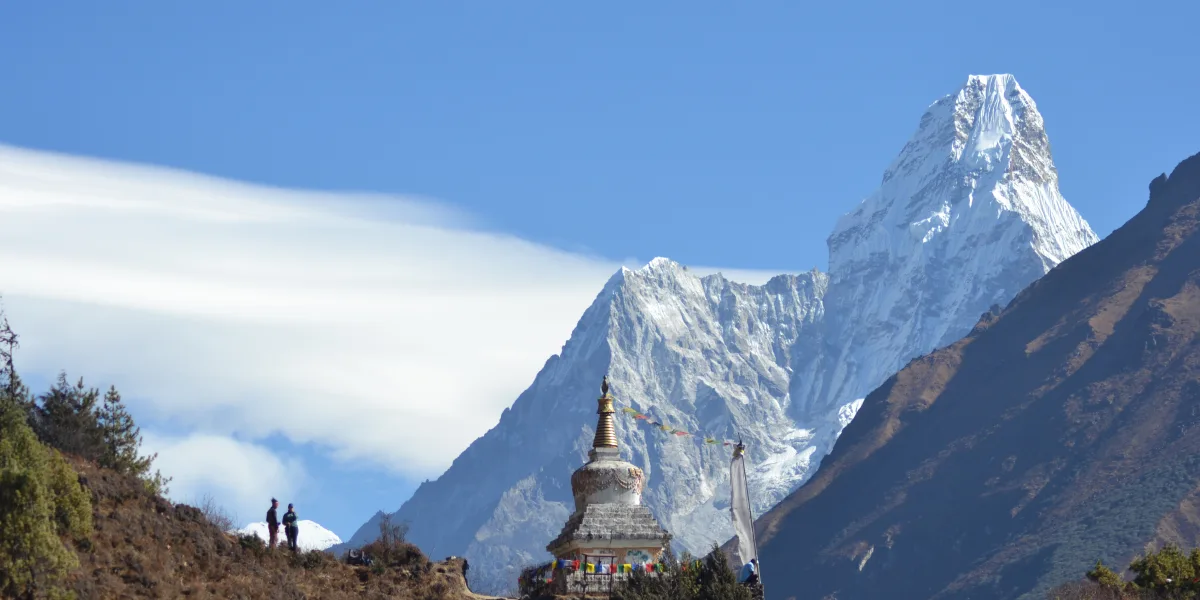
Ama Dablam is a stunning peak in the eastern Himalayas of Nepal, standing at 6,812 meters (22,349 feet) above sea level. It is part of the Khumbu region and is often referred to as the “Matterhorn of the Himalayas” due to its distinctive, pyramid-like shape and dramatic ridges.
The mountain is renowned for its striking beauty, featuring steep, snow-covered faces and sharp granite spires. Its name translates to “Mother’s necklace,” symbolizing the sacred and protective nature of the mountain, with the lower part resembling a mother holding her child.
Ama Dablam is a popular destination for climbers, known for its technical challenges and breathtaking views of the surrounding peaks, including Mount Everest. The climbing season typically runs from April to May and October to November. The trek to the base camp offers stunning landscapes, rich Sherpa culture, and diverse wildlife, making it a favorite among trekkers as well.
Overall, Ama Dablam is not only a climber’s paradise but also a symbol of the majestic beauty of the Himalayas.
One of the three high passes in the Everest region, the Kongma La Pass rises to a height of 5,535 meters and provides adventure seekers with a thrilling and less-traveled path. Trekkers can enjoy breathtaking views of famous peaks like Ama Dablam, Lhotse, Nuptse, and Makalu from this pass, which connects Chhukung and Lobuche.
The track, which is well-known for its secluded beauty and difficult terrain, is a true test of stamina and resolve because it includes glacial moraines, steep climbs, and rocky roads. Trekkers receive the Himalayas’ serene seclusion and stunning views in exchange.
The Ama Dablam Base Camp trek via the Kongma La Pass(5535m) is a challenging route designed for seasoned trekkers seeking a more remote experience in the Everest region. Unlike the popular Everest Base Camp trek, this trail is less crowded, offering a serene adventure through rugged terrain, snow-covered passes, and remote villages. Along the way, you’ll experience the Sherpa culture up close while enjoying unparalleled views of some of the highest peaks on Earth.
This trek is perfect for those looking for a strenuous yet advantageous experience, combining high-altitude passes with the majestic allure of Ama Dablam Base Camp(5120m). Whether you’re drawn to the towering mountains, the quiet charm of Sherpa villages, or the excitement of trekking through snow and ice, this journey promises to leave a lasting impression.
Recommended for:
For a top-tier trekking experience, Save Mountain Treks & Expedition ensures a safe, guided experience through well-planned itineraries, offering expert knowledge of the region and its culture.
Join the 15-day Ama Dablam Base Camp trek via Kongma La Pass for breathtaking views, Sherpa culture, and high-altitude adventure. Book your journey today!
Upon your arrival at Kathmandu Airport, you will be warmly welcomed by a representative from Save Mountain Treks & Expedition. They will assist you with your luggage and transport you to your hotel in the bustling Thamel district, known for its vibrant atmosphere, shops, and restaurants.
After checking in, you’ll have the evening free to relax or explore the area. Thamel is a great place to shop for any last-minute trekking gear or souvenirs. You can wander through the narrow streets, sample local cuisine, and soak in the lively ambiance.
Make sure to prepare for your early morning flight to Lukla, as it’s the gateway to the Everest region. You might want to double-check your gear and pack everything you’ll need for the trek.
Enjoy your first night in Kathmandu, and get ready for an exciting adventure ahead!
On the first day of your trek, you’ll embark on an exhilarating flight to Lukla, a gateway to the Everest region. During peak trekking seasons (March-May and September-November), flights may depart from Manthali due to congestion at Kathmandu’s Tribhuvan International Airport. This necessitates a scenic 5-hour early drive to Manthali Airport to catchup morning 20-minute flight to Lukla. Off-peak season travelers can enjoy a direct 40-minute flight from Kathmandu.
Once in Lukla (2,850m / 9,350ft), the trek begins with a gentle 3-hour hike through small Sherpa villages like Chaurikharka, leading to Phakding. Covering a distance of 6.2km (3.8 miles), the trail offers stunning views of the surrounding hills and river valleys. Phakding is a lively settlement with guesthouses, shops, and eateries, making it a perfect first stop. Don’t miss visiting the Rimishung Monastery to experience some local culture.
Today’s trek covers a distance of 7.4km (4.6 miles) over 6 hours as you hike towards Namche Bazaar, the bustling hub of the Everest region. Starting early from Phakding, you’ll follow the Dudh Koshi River, crossing multiple suspension bridges adorned with colorful prayer flags. The trek gradually ascends, passing Monjo village, the gateway to Sagarmatha National Park. Here, you’ll register your trekking permits before heading into a dense forest where the first glimpses of Mount Everest appear.
As you climb higher, the trail becomes steeper, leading to Namche Bazaar. This vibrant mountain town, known as the gateway to Everest, offers modern amenities, from cozy lodges to bakeries, making it a rewarding destination after a challenging day.
To adjust to the altitude, you’ll spend a rest day in Namche Bazaar (3,440m). Although it’s a day to acclimatize, there are several activities to keep you engaged. You can take a short hike to the nearby Khumjung village, home to the legendary Yeti scalp at a famous monastery, and explore the Sagarmatha National Park Visitor Center.
For panoramic views of Everest, Ama Dablam, and other peaks, a trek to the Everest View Hotel is highly recommended. This acclimatization day helps your body adapt while allowing you to enjoy the vibrant energy and facilities of Namche, which boasts cafes, souvenir shops, and more.
The trek from Namche to Deboche covers 9km (5.4 miles) and takes about 5 hours. The trail offers stunning views of Everest, Ama Dablam, and other Himalayan giants. After a steep ascent, you’ll reach the village of Phunki Tenga, surrounded by breathtaking mountain vistas. Continuing uphill, you’ll pass through Tengboche Monastery, the largest gompa in the Khumbu region, perched on a hilltop.
After soaking in the spiritual atmosphere at Tengboche, the trail descends through beautiful rhododendron forests to the quiet village of Deboche. Surrounded by serene nature, Deboche is an ideal spot to relax after a day of trekking.
Today’s trek takes you to the picturesque village of Dingboche, covering 11km (7.4 miles) over 7-8 hours. Passing through the traditional Sherpa village of Pangboche, you’ll hike past stone mani walls and Buddhist stupas, all while enjoying up-close views of Ama Dablam. The trail leads into the expansive Imja Valley, where the Lobuche River flows.
After a steep climb, you’ll reach Dingboche, known as the summer valley of the Khumbu region. Surrounded by towering peaks, this charming village offers a glimpse of the traditional high-altitude lifestyle. Fields of barley and potatoes enclosed by stone walls give the village a distinct charm, and the views of the Himalayas are simply breathtaking.
This relatively easy day involves a 7-8 hour trek, covering 11km (7.4 miles) from Dingboche to the small village of Chhukung. The trail passes several Buddhist stupas and mani walls, offering picturesque views with prayer flags swaying in the wind. As you ascend gradually, you’ll witness stunning panoramas of Ama Dablam, Lhotse, and Island Peak.
Chhukung is a popular stop for trekkers seeking to acclimatize before attempting high-altitude passes or peaks. This quiet village also provides an opportunity for additional hikes and offers spectacular views of the surrounding glaciers and mountains.
Chhukung serves as a perfect acclimatization spot for trekkers aiming to cross the Kongma La Pass or climb Island Peak. Even on this rest day, you can choose to hike up to Chhukung Ri, a high viewpoint that offers exceptional views of some of the highest peaks in the world, including Lhotse, Makalu, and Ama Dablam.
Relaxing in Chhukung also offers an opportunity to take in the serene beauty of the landscape, with snow-covered mountains and glistening glaciers providing a spectacular backdrop.
This challenging day involves crossing the Kongma La Pass, one of the highest points of the trek, at 5,535m (18,159ft). The trek covers a distance of 11km (7 miles) over 7-8 hours. The ascent to the pass is steep and demanding, especially in snowy conditions, but the breathtaking views of Kongma La Lake and the surrounding snow-capped peaks make the effort worthwhile.
After crossing the pass, you’ll descend towards Lobuche, passing the Khumbu Glacier along the way. The view from Lobuche, with Mount Everest and Kala Patthar illuminated by the setting sun, provides a spectacular conclusion to the day.
The journey from Lobuche to Pangboche covers 16km (10 miles) and takes about 6-7 hours. The trail descends gradually, offering stunning views of the surrounding peaks. As you trek back towards Pangboche, you’ll pass through familiar landscapes but with a renewed sense of accomplishment. The easier terrain allows for a more relaxed pace, and you might spot yaks grazing in the meadows or bathing in nearby rivers.
Pangboche is a quiet village, known for its rich Sherpa culture and ancient monastery. It’s the perfect place to unwind before the final leg of the trek to Ama Dablam Base Camp.
Today’s highlight is the trek to Ama Dablam Base Camp, covering 6-7 hours of hiking. As you ascend, you’ll get a closer look at the majestic Ama Dablam, often referred to as the “Mother’s Necklace” due to its unique shape. The base camp offers unparalleled views of Everest, Lhotse, and the surrounding peaks.
After enjoying the serenity of the base camp, you’ll return to Pangboche, concluding one of the most rewarding days of the trek.
The trek from Pangboche to Namche Bazaar covers a distance of 5.9km (3.6 miles) and takes about 5-6 hours. As you descend from Pangboche, you’ll retrace your steps along the Dudh Koshi River, passing picturesque villages, prayer wheels, and vibrant prayer flags that add color to the surrounding landscapes.
The mostly downhill trail is a pleasant break from the more intense portions of the trek, offering spectacular views of Everest, Lhotse, and other towering peaks. As you approach Namche Bazaar, the feeling of accomplishment begins to sink in, and you can celebrate your successful trek by exploring Namche’s many restaurants, bakeries, and shops.
On the final day of trekking, you’ll descend from Namche Bazaar to Lukla, covering 13.5km (8.3 miles) over 6-7 hours. The trail is mostly downhill, but still challenging due to the length of the hike. You’ll pass through dense forests, cross several suspension bridges, and trek past villages like Phakding and Benkar, reminiscing on your earlier days of the journey.
As you approach Lukla, the gateway to the Everest region, you’ll have time to relax and reflect on your trekking adventure. Lukla is a lively town with a variety of guesthouses and eateries where you can enjoy a well-deserved meal and rest. This will mark the end of your trekking experience in the Himalayas, and you can look forward to the scenic flight back to Kathmandu.
Depending on the trekking season, your flight back to Kathmandu will either depart directly from Lukla or via Manthali. During the peak trekking months (March-May and September-November), flights may be rerouted to Manthali due to congestion at Tribhuvan International Airport. In that case, you’ll enjoy a brief 20-minute flight to Manthali, followed by a scenic 5-hour drive back to Kathmandu. During the off-peak months (December-February and June-August), you’ll fly directly from Lukla to Kathmandu, a 40-minute flight.
Back in Kathmandu, you can unwind and celebrate the successful completion of your trek. Take time to explore the cultural richness of the capital city by visiting markets, temples, and historical sites.
Your journey comes to an end today. After breakfast, you will be transferred to Tribhuvan International Airport for your departure flight. Take home unforgettable memories of your adventure on the Ama Dablam Base Camp Trek Via Kongmala Pass Trek and the beautiful Himalayan landscapes.
The trek is considered challenging due to high altitudes, steep ascents, and rugged terrain. Crossing Kongma La Pass (5,535m) adds an extra level of difficulty. Trekkers should be in good physical condition and have prior experience in high-altitude trekking.
The best months to trek are during the pre-monsoon (March-May) and post-monsoon (September-November) seasons. During these periods, the weather is relatively stable, skies are clear, and the views are magnificent. Winter (December-February) treks are possible, but the cold can be intense, while summer (June-August) may bring heavy rain and difficult trail conditions.
Yes, it is recommended to have prior trekking experience, especially at high altitudes. The Ama Dablam Base Camp trek via Kongma La Pass includes steep, rocky sections and high-altitude crossings that may challenge even experienced trekkers.
The highest altitude reached on this trek is Kongma La Pass at 5,535m (18,159ft). Ama Dablam Base Camp is at 5,120m (16,797ft), while the overnight stops are at lower altitudes to aid acclimatization.
The trek typically takes 14 days, starting and ending in Kathmandu, The itinerary includes acclimatization days and rest periods, which are essential for adjusting to high altitudes.
Booking Form


