Max Elevation
5160m

Group Size
Min.1Pax

Duration
21 Days

Difficulty
Moderate-Difficult

Accomodation
Hotels/Lodges

Meals
L.D.B

Best Seasons
March-May & Sept-Nov

Transportation
Private Vehicle, sharing jeep and Bus

Region
Annapurna Region
Discover the extraordinary Manaslu Circuit Trek with Tsum Valley, an unspoiled Himalayan adventure combining breathtaking mountain vistas with authentic cultural immersion. This trekking route offers a pristine alternative to the crowded Everest Base Camp and Annapurna Circuit trails, allowing trekkers to experience Nepal’s majestic landscapes in serene solitude.
Join our 20-day Manaslu Circuit Trek with Tsum Valley and explore untouched trails, ancient monasteries, and epic mountain views. Book your journey with Save Mountain Treks today!
Upon your arrival at Tribhuvan International Airport in Kathmandu, you’ll be greeted by our team and transferred to your hotel. The rest of the day is free for you to rest or explore the vibrant streets of Thamel, the heart of Kathmandu’s tourist district. In the evening, you’ll attend a welcome dinner featuring traditional Nepali cuisine.
Spend the day exploring Kathmandu’s UNESCO World Heritage Sites, including Pashupatinath Temple, Swayambhunath Stupa (Monkey Temple), and the historic Kathmandu Durbar Square. In the afternoon, you’ll meet your trekking guide for a briefing and final preparations
Duration: 7-8 hours
The journey begins with a long drive from Kathmandu to Machha Khola, passing through picturesque hills, rivers, and terraced fields. The road, while rough in parts, offers beautiful views of the Trishuli River and surrounding countryside.
Duration: 6-7 hours
The trek officially starts as you follow the trail along the Budhi Gandaki River. Crossing several suspension bridges, you’ll pass through Gurung and Magar villages before reaching the small settlement of Jagat.
Duration: 4-5 hours
The trail continues to rise through a mix of forests and terraced fields. You’ll pass the village of Salleri and Sirdibas before arriving in Chisopani, where you can enjoy stunning views of the surrounding mountains.
Duration: 6-7 hours
Today, you enter the Tsum Valley, a hidden gem of Tibetan Buddhist culture. The trail involves several steep climbs and descents, with the landscape becoming more rugged and remote as you reach Chumling.
Duration: 5-6 hours
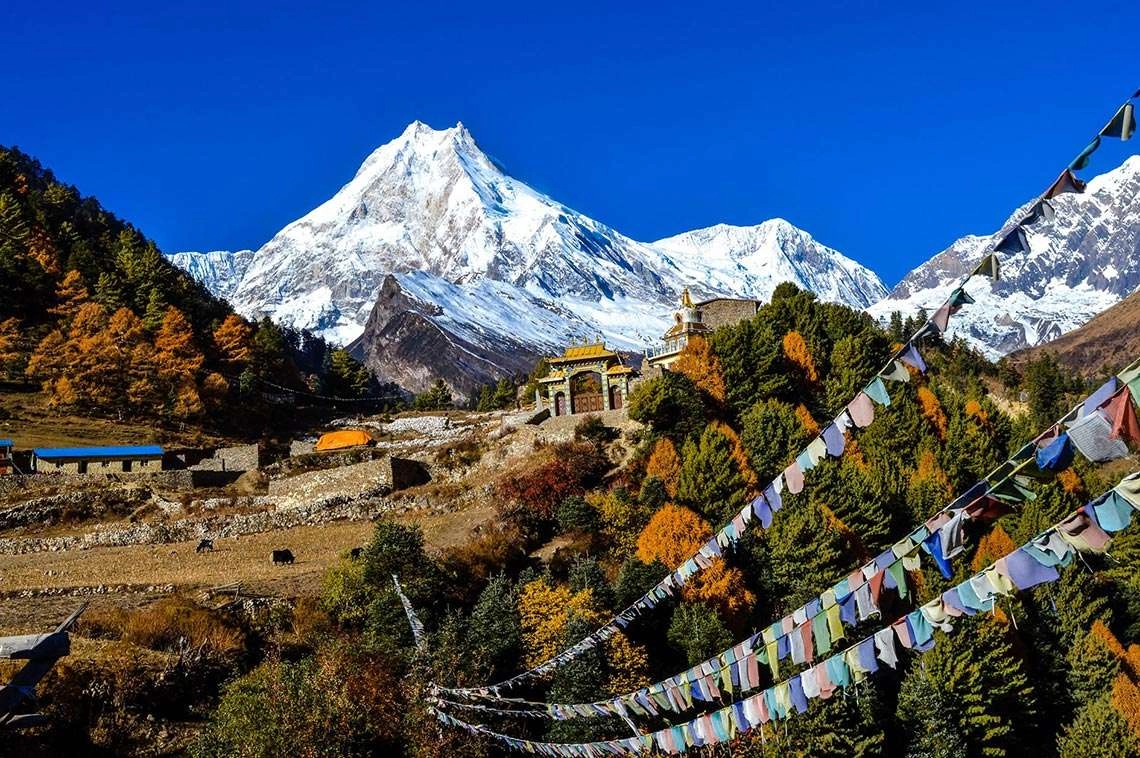
The trail continues deeper into Tsum Valley, crossing the Siyar River and ascending to the village of Chokhangparo. Here, you’ll find ancient monasteries and traditional houses adorned with prayer flags, and you’ll start to feel the altitude.
Duration: 5-6 hours
Continue trekking through the upper Tsum Valley, passing through villages like Lamagaon and Burji. The landscape is increasingly dominated by mountains, and you’ll visit the impressive Milarepa Piren Phu Cave en route to Nile.
Duration: 3-4 hours
A shorter day, but with a significant climb, as you reach Mu Gompa, the highest and most remote monastery in the Tsum Valley. The area around Mu Gompa offers incredible views of the surrounding peaks and a deep sense of tranquility.
Spend the day exploring Mu Gompa and its surroundings. This is an important day for acclimatization as you adjust to the altitude. You may also visit the nearby Dhephu Doma Gompa or hike to the base of Pika Himal for panoramic views.
Duration: 7-8 hours
Retrace your steps back down the valley and continue towards Deng, rejoining the main Manaslu Circuit trail. The descent offers a different perspective on the landscape you’ve previously trekked through.
Duration: 6-7 hours
The trail to Namrung involves a steady ascent through dense forests, with glimpses of Manaslu and other peaks appearing as you climb higher. Namrung is a charming village with well-preserved Tibetan architecture.
Duration: 6-7 hours
Continue trekking through alpine meadows and past picturesque villages like Lho and Shyala. The trail offers breathtaking views of Manaslu and other Himalayan peaks as you approach Samagaon, one of the largest villages in the region.
A day to rest and acclimatize in Samagaon. You can take a side trip to Manaslu Base Camp or explore the Pungyen Gompa, a beautiful monastery with panoramic views of the mountains.
Duration: 4-5 hours
A relatively short trek through the upper reaches of the Budhi Gandaki Valley, with the landscape becoming more barren and rugged as you gain altitude. Samdo is a small village near the Tibetan border, offering stunning views and a glimpse into traditional Tibetan life.
Duration: 4-5 hours
The trail climbs steadily as you approach the Larkya La Pass. Dharamsala (also known as Larkya Phedi) is the base camp for the pass, and you’ll spend the night here to prepare for the challenging ascent the next day.
Duration: 8-9 hours
The most challenging day of the trek begins with a pre-dawn start to cross the Larkya La Pass. The ascent is steep and demanding, but the views from the top are spectacular, with vistas of Himlung Himal, Cheo Himal, and Kang Guru. The descent to Bimthang is long but rewarding, with the landscape gradually changing from barren highlands to lush forests.
Duration: 6-7 hours
A long descent through rhododendron forests and across glacial rivers brings you to the village of Tilje. The trail passes through lush landscapes with stunning views of the Manaslu range, and you’ll begin to feel the warmth of lower altitudes again.
Duration: 4-5 hours trek, 3-4 hours drive
The final day of trekking takes you to Dharapani, where you’ll meet the road and transfer by jeep to Besisahar. The drive offers a final chance to soak in the views of the Annapurna range before reaching the bustling town of Besisahar.
Duration: 6-7 hours
A scenic drive back to Kathmandu, where you can relax and reflect on the incredible journey you’ve just completed. In the evening, enjoy a farewell dinner to celebrate the successful trek.
Your Himalayan adventure comes to an end today, but the memories and the sense of accomplishment will stay with you. Depending on your flight time, you may have a few last moments to enjoy Kathmandu before your departure. Safe travels, and we hope to see you again for another adventure in Nepal.
The Manaslu Trek with Tsum Valley is a journey through some of the most remote and culturally rich regions of Nepal. Unlike the more popular treks, this route offers a blend of stunning natural beauty, cultural immersion, and spiritual significance. The Tsum Valley, often referred to as the “Hidden Valley,” is steeped in Tibetan Buddhist culture, with ancient monasteries, traditional villages, and a way of life that has remained unchanged for centuries. The trek is less crowded, allowing for a more intimate experience with the mountains and local communities.
The trek is considered challenging due to its length, altitude, and the rugged terrain. Daily trekking hours typically range from 6 to 8 hours, with some days involving steep ascents and descents. The highest point on the trek is the Larkya La Pass at 5,160 meters, which requires good physical fitness and proper acclimatization. However, with adequate preparation and a steady pace, most trekkers find the challenge to be rewarding and manageable.
Yes, the Manaslu region and Tsum Valley are restricted areas, requiring special permits to enter. You’ll need the Manaslu Restricted Area Permit, the Annapurna Conservation Area Permit (ACAP), and the Manaslu Conservation Area Permit (MCAP). Additionally, a Tsum Valley Restricted Area Permit is required if you plan to visit Tsum Valley. These permits help preserve the natural environment and support local communities.
Accommodation along the Manaslu Trek with Tsum Valley ranges from basic tea houses to simple guesthouses. Rooms are typically twin-sharing with shared bathroom facilities. In more remote areas like the Tsum Valley, amenities may be more limited, but the hospitality of the local people more than makes up for it. It’s advisable to bring a sleeping bag, as blankets provided might not be sufficient in colder regions.
Altitude sickness is a concern on this trek, especially as you approach and cross the Larkya La Pass. To minimize the risk, it’s crucial to acclimatize properly. Our itinerary includes rest days for acclimatization at higher altitudes. Hydrate well, walk at a steady pace, and avoid alcohol. It’s also recommended to consult with your doctor about taking Diamox (acetazolamide) as a preventive measure.
Connectivity is limited in the Manaslu region, particularly in the Tsum Valley. Some tea houses offer Wi-Fi for a small fee, but the connection can be unreliable. Mobile networks may have coverage in certain areas, but it’s best to be prepared for a digital detox. We recommend informing your loved ones before the trek that communication might be sparse.
Booking Form