Max Elevation
5416m

Group Size
Min.2 pax

Duration
16 Days

Trip Difficulty
Moderate - Difficult

Accomodation
Hotel, Lodges

Meal
B.L.D

Best Season
September - December

Transportation
Tourist Bus - Jeep

Region
Annapurna Region
Trek with Save Mountain Treks across diverse landscapes, from lush valleys to the high Thorong La Pass. Book your life-changing adventure today!
Upon arrival in TIA, you’ll be picked up by one of our members and transferred to your hotel. You’ll be briefed about your plans and itinerary. There are no activities planned today so you can roam around the surroundings or rest at the hotel itself.
Leaving the vibrant city of Kathmandu behind, you’ll embark on a scenic drive that gradually introduces you to the serene landscapes of the Nepalese countryside. As you travel towards Beshisahar, the entry point to the Annapurna region, the bustling streets of Kathmandu give way to lush green hills, traditional villages, and terraced farmlands. The drive offers a perfect blend of natural beauty and cultural immersion, making it an unforgettable experience.
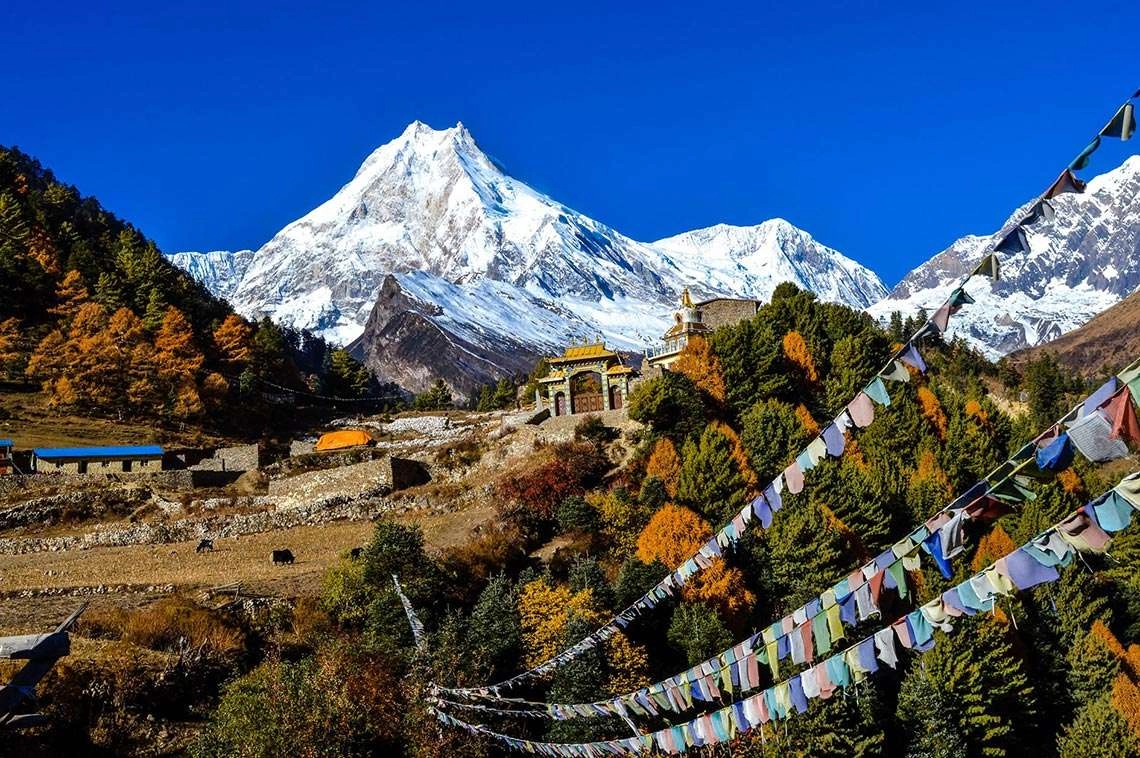
The drive from Besisahar to Chame is not just about the destination, but the journey itself. The off-road conditions make for an adventurous ride, with bumpy trails, rocky paths, and river crossings adding to the excitement. Throughout the drive, you’ll be surrounded by some of the most stunning landscapes in Nepal, with views of majestic peaks like Lamjung Himal, Annapurna II, and Manaslu.
The trek from Chame to Upper Pisang begins with a gentle ascent through dense pine forests and alongside the Marsyangdi River. As you walk, you’ll be surrounded by the towering peaks of the Annapurna range, including Annapurna II and Lamjung Himal, offering spectacular views at every turn. The trail winds through picturesque villages, where you can witness the traditional lifestyle of the local Gurung and Tibetan communities.
Starting from the picturesque village of Upper Pisang, the trek ascends along the upper trail, which is known for its stunning views and fewer crowds compared to the lower route. As you climb higher, the landscape changes dramatically, with lush forests giving way to rugged terrain and expansive vistas of the Annapurna range, including Annapurna II, Annapurna IV, and the majestic Pisang Peak.
The trail leads you through alpine meadows and past ancient prayer wheels and chortens, reflecting the deep spiritual connection of the local people to the land. As you approach the village of Nawal, perched on a high ridge, you’ll be rewarded with some of the most spectacular views of the Annapurna massif. Nawal is a traditional village that offers a glimpse into the simple yet rich cultural life of the local communities.
Continuing from Nawal, the trail takes you through a landscape that feels almost otherworldly, with towering cliffs, barren hillsides, and the occasional yak grazing in the fields.
The village is surrounded by some of the most breathtaking mountain scenery in the region, with views of Gangapurna, Tilicho Peak, and the Annapurna range. In Manang, you can explore local monasteries, visit the Himalayan Rescue Association clinic, or simply relax and enjoy the serene beauty of the area.
Spend a crucial acclimatization day in Manang, located at 3,519 meters, to help your body adjust to the altitude before continuing your trek on the Annapurna Circuit. This day is vital for preventing altitude sickness and ensuring a successful journey through the high passes.
Optional Activities:
Today, we are heading towards Shree Kharka . We will start the hike via a western gate and follow a trekking path via the river. We will cross the river and resume the journey by walking through a coniferous forest on its southern side. After walking for few hours, we reach Kangsar village. Most would stop here for the day, but our stopping point is a few hours away. Continuing the walk, we pass several monasteries on the way before reaching Siri Kharka. All along the trek, we will be in the company of Gungang Himal and Mount Chulu.
After Shree Kharka entails walking through a mild steep path. So it is not physically demanding, but one can be exhausted because we cover quite a height and walk on a narrow path through loose scree and landslide-prone area. We walk past mid-hills where landslide often occurs with the impressive rock formation
The initial climb to the Lake is a bit arduous, but our trail proceeds to pester along the mountain’s side in a gentle steep incline before reaching the Lake. While ascending, we bypass a mellow grazing terrain where you will see yaks and deer grazing. Tilicho Lake, an immensely stunning lake tucked away at the foot of the north face of Tilicho Peak, is on the other side.
From Base Camp we retrace our path back to Shree Kharka. After we descend to the uninhabited Khangsar Village. On the way, we pass Tare Gumba, a thousand-year-old monastery, but our journey continues following a rock will takes us out from Khangsar and leads us to Thorong Khola Valley and finally to Yak Kharka. From here you can get glorious views of the Annapurna mountain ranges. If you are lucky, you may also get sight of blue sheep or even snow leopard.
scattered herds of yaks, which give Yak Kharka (“Yak Pasture”) its name. As you gain altitude, the air becomes thinner, and the scenery more dramatic, with sweeping views of Annapurna III, Gangapurna, and Tilicho Peak.
the trail ascends gradually, taking you through rugged terrain and across the windswept slopes of the Annapurna region. As you trek, you’ll pass through Ledar, a small settlement where you can rest and take in the panoramic views of the surrounding peaks, including Chulu West and Thorong Peak.
The path continues to climb steadily, crossing a suspension bridge over the Kone Khola River before reaching Thorong Phedi at 4,540 meters. This base camp for the Thorong La Pass is surrounded by dramatic cliffs and towering mountains, providing a sense of anticipation for the challenge that lies ahead.
We will make an early start on our climb to the pass. We need to be fresh because the initial ascent stage is very steep.
As we approach the peak, the trail becomes slushy from melting snow.
After making our way through rocky ridges, we arrive at the top of the pass (5,416m). The top offers an indescribably magnificent 360-degree panorama of snow-capped peaks extending northwards into Tibet.
Looking back, we can see several peaks of Annapurna, and in front of us is the beautiful gorge of Kali Gandaki.
Our trail then descends steeply down to Muktinath—an important pilgrimage site for Hindus. It is a special place and home to many ethnic Tibetans and devout Buddhists.
After visiting Muktinath, we’ll embark on a journey by private four-wheel vehicle towards Tatopani. Along the way, we’ll pass the Jomsom Airport and the charming Marpha village. Marpha, whose name signifies “hard-working people” (“mar” meaning hard-working and “pha” meaning people), is renowned for its dedication to tourism, mule rearing, and farming, particularly apples and potatoes. Here, you’ll have the opportunity to taste or purchase a variety of apple products, such as apple chips, pickles, and more.
Upon arriving in Tatopani, we’ll unwind at our lodge before heading out to the nearby hot springs. The hot spring will be the perfect remedy to soothe sore muscles, especially after the challenging day at Thorong La Pass.
As we ascend to Ghorepani, our trail takes us through the ethnic villages of Sikha and Chitre. The journey leads us through lush forests filled with rhododendron, birch, and magnolia trees. In the blooming season, these forests come alive with vibrant pink and bright red hues from the rhododendrons, creating a breathtaking natural spectacle. Ghorepani, perched atop a ridge, will be our destination for the day, offering stunning views and a peaceful atmosphere amidst nature’s beauty.
Today, you’ll embark on an early morning hike to the Poon Hill viewpoint (3,210m) to witness the breathtaking panoramic views of the Annapurna South, Dhaulagiri range, Dhampus Peak, Bara Shikhar, Himchuli, and the iconic Fishtail (Machapuchare). Poon Hill is renowned as one of the most popular photographic spots along this trail, and possibly in all of Nepal. You’ll have ample time to soak in the stunning natural beauty as the sun rises over the majestic peaks.
Afterward, you’ll return to Ghorepani to enjoy a well-deserved breakfast before continuing your trek to Tadapani.
Low altitude Tadapani to Ghandruk trek would give you uninterrupted views of the Annapurna South, Fishtail and Himchuli and fascinating Gurung community villages surrounded by mystic clouds
Tadapani to Ghandruk trek is a perfect combination of nature and culture that offers trekkers the chance to experience the stunning beauty of the traditional lifestyle of the Gurung people. This trek leads you through lush forests, picturesque villages, and provides breathtaking views of the Himalayas.
we bid farewell to the majestic path and drive to Pokhara. The fun is yet to begin as Pokhara is the most happening city in Nepal. With the nightlife, boating, pubs, and bars, Pokhara offers all the luxury you would want.


The best time to trek the Annapurna Circuit with Tilicho Lake is during the **spring (March – June)** and **autumn (September – November)** seasons, when the weather is favorable and the views are exceptionally clear.
However, Save Mountain Treks & Expedition offers the Annapurna Circuit Trek with Tilicho Lake throughout the year, ensuring that you can embark on this incredible journey at any time that suits your schedule.
The Annapurna Circuit Trek requires a good fitness level. You should have strong cardiovascular endurance, the ability to hike 5-7 hours daily, and good leg strength for steep climbs. Acclimatization to high altitudes is crucial, with the highest point being Thorong La Pass at 5,416 meters. Mental resilience and some preparation, ideally 3-6 months in advance, are also important for a successful trek.
After making the advance payment, please email the following documents:
The duration of Annapurna Circuit Trek depends, but it usually takes about 14-21 days to complete entire trek.
Experience the essence of Nepal on the Annapurna treks, where stunning views from Thorong La Pass and Poon Hill meet diverse landscapes and the warm hospitality of local communities. It’s a perfect mix of adventure and culture.
Yes, travel insurance is essential for the Annapurna Circuit Trek with Tilicho Lake. Your policy must include coverage for helicopter rescue at high altitudes and medical treatment costs due to the remote and challenging nature of the trek.
To secure your booking, please make a 10% advance payment of the trek cost. You can choose to pay via bank transfer, Western Union, or online through our website. The remaining balance can be settled in cash, by bank transfer, Western Union, or with a credit card. We will send you an email with all the payment options and details.
Yes, the company offers a cancellation and refund policy. For detailed information, please refer to the terms and conditions page.
Although you can’t completely avoid altitude sickness, you can reduce the risk by following certain precautions. Proper acclimatization, pacing yourself, staying hydrated, trekking high and sleeping low, and eating well are key. Our guides will offer additional tips to help manage and minimize the risks associated with altitude sickness.
Save Mountain Treks manages lodge-lodge accommodations. You’ll mostly be accommodated in twin-sharing rooms with squat-style toilets, which are generally situated outside the rooms in higher altitudes. The rooms offer basic amenities such as blankets and pillows, but we recommend bringing a sleeping bag for added warmth. Hot showers are available for an extra charge.
If you have allergies to certain medications, please consult your doctor and bring your own medications. You can also find most medications in Kathmandu at reasonable prices.
Yes, the company guarantees that vegetarian trekkers will be provided with nutritious and hygienic vegetarian meals. We choose top lodges and teahouses to ensure that dietary needs are met.
Yes, trekking gear is available for rent or purchase in Nepal. We can suggest stores in Kathmandu where you can find and acquire the necessary equipment.
Booking Form
| 2 – 3 pax | USD $1400 |
| 4 – 6 pax | USD $1200 |
| 7 above | USD $1000 |