

Hidden in the far north of Nepal, Upper Mustang is often called “The Hidden Kingdom” for its untouched beauty and ancient culture. The dry, desert-like hills, colorful cliffs, and centuries-old monasteries make it one of Nepal’s most unique trekking regions.
Upper Mustang lies near the Tibetan border, giving it a deep cultural and spiritual connection with Tibet. Trekkers visit this area to explore Lo Manthang, the old walled capital, and to experience a lifestyle that has changed very little over time. The landscapes, caves, and friendly locals make the journey feel both peaceful and adventurous.
In this blog, we’ll explain how long the Upper Mustang trek takes, the usual routes, and the main factors that affect your trek duration. If you’re planning a trip to this mysterious Himalayan kingdom, this guide will help you prepare and make the most of your adventure.
The Upper Mustang Trek is a restricted Himalayan route that takes you to Lo Manthang, the ancient walled capital of Mustang. It offers a rare chance to explore one of Nepal’s most remote and culturally rich regions.
Located near the Tibetan border, Upper Mustang shares deep cultural ties with Tibet. The landscape looks different from most parts of Nepal—it’s dry, rocky, and filled with red cliffs and hidden caves. Along the way, trekkers walk through small villages where people still follow old Tibetan Buddhist traditions, wear traditional clothes, and live a peaceful mountain life.
The trek is not only scenic but also spiritual. You’ll pass through ancient monasteries, chortens (stupas), and colorful prayer flags fluttering in the wind. The beauty of the barren desert, mixed with snow-capped peaks and centuries-old culture, makes Upper Mustang a truly special trekking experience—like walking through a living museum of Himalayan history.
The Upper Mustang trek usually takes 10 to 14 days, depending on your route, walking speed, and the number of acclimatization or rest days you include.
Most treks start from Jomsom, a small town reached by a short flight from Pokhara, and continue north to Lo Manthang, the ancient walled city of Mustang. From there, trekkers often return the same way or take an alternate route through scenic villages like Dhakmar and Samar.
The total number of days can change based on your fitness level, weather conditions, and transport options. For example, strong trekkers may finish the route faster, while others may take extra rest days to adjust to the altitude. Delays in flights between Pokhara and Jomsom can also affect the schedule, so it’s smart to keep a buffer day for flexibility. Whether you choose a short or extended version, the journey offers an unforgettable mix of landscapes, culture, and adventure.
Want to know more about the Lower Mustang Trek? Check out our detailed Lower Mustang Trek guide
for complete route insights, highlights, and travel tips.
A standard Upper Mustang trek usually takes 12 days, starting and ending in Jomsom. This route gives you enough time to explore Lo Manthang and enjoy the cultural and natural beauty along the way.
Here’s a simple 12-day itinerary most trekkers follow:
You can also add extra days for acclimatization or sightseeing, especially around Lo Manthang or the nearby Chhoser caves. Each day offers something new—colorful Buddhist prayer walls, unique local homes, and stunning views of the Nilgiri and Dhaulagiri ranges. The balance of culture and scenery makes this one of Nepal’s most rewarding Himalayan treks.
The duration of the Upper Mustang trek depends on several factors such as your fitness level, weather, and itinerary choices. Some trekkers finish in 10 days, while others take up to 14 or more for a slower, more comfortable pace. Here are the main things that can influence how long your trek takes:
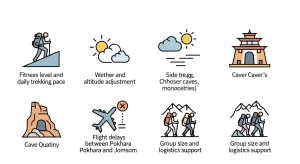
Your physical fitness plays a big role in how quickly you can complete the trek. Experienced hikers who train before the trip can walk longer distances each day. Beginners may prefer shorter walking hours to avoid fatigue and fully enjoy the scenery. Regular cardio, leg workouts, and short hikes before your trip can help improve endurance.
The weather in Mustang is generally dry, but strong winds and changing temperatures can affect your schedule. Some days may require shorter walks for safety. Also, as you reach higher altitudes near Lo Manthang, your body needs time to acclimatize. Adding one rest or adjustment day helps prevent altitude sickness and keeps your trek comfortable.
Many trekkers extend their journey to visit Chhoser caves, ancient monasteries, or nearby viewpoints. These side trips add 1–2 days to your plan but make the experience richer. Exploring local villages or attending cultural festivals, like the Tiji Festival, is worth the extra time.
Flights to and from Jomsom are weather-dependent and often delayed due to strong mountain winds. Keeping one buffer day at the start or end of your trek helps you avoid missing connections or feeling rushed.
If you’re trekking in a large group, it might take longer to coordinate breaks, meals, and accommodations. Having a professional guide and porter from a reliable agency ensures smoother logistics, proper planning, and timely progress throughout the journey.
The best time to trek Upper Mustang is from March to November, when the weather is dry, skies are clear, and the trails are safe. This region lies in a rain-shadow area, meaning it stays mostly dry even during Nepal’s monsoon months.
Unlike other trekking routes, Mustang can be visited even in June, July, and August, as the surrounding mountains block most of the rain. During these months, you’ll enjoy colorful landscapes, fewer crowds, and warm village life. However, many trekkers prefer spring (March–May) and autumn (September–November) for the best combination of weather and scenery.
In spring, the days are longer, and you’ll see blooming wildflowers against the dry, desert hills. This season also brings vibrant local festivals like the Tiji Festival in Lo Manthang, where monks perform masked dances to celebrate the victory of good over evil. In autumn, the air is crisp and the visibility excellent—perfect for capturing clear views of the Nilgiri and Dhaulagiri mountains.
No matter when you visit, Upper Mustang offers a unique experience each season—spring for its energy and culture, autumn for its calm and beauty, and even monsoon for peaceful trails and dramatic skies.
Related Blog: Best Time to Trek in Nepal – Full Guide by Season
To trek in Upper Mustang, you need two main permits — the Restricted Area Permit (RAP) and the Annapurna Conservation Area Permit (ACAP). These permits help protect the region’s environment, culture, and heritage while regulating visitor entry.
The Restricted Area Permit is required because Upper Mustang is a controlled area close to the Tibetan border. It costs USD 500 per person for the first 10 days, and USD 50 for each additional day. You also need the ACAP, which costs around NPR 3,000 (about USD 25) per person. Both permits can only be issued through a registered trekking agency in Nepal, such as Save Mountain Treks, and not to individual travelers.
Solo trekking is not allowed in Upper Mustang. Nepal’s government requires every traveler to be accompanied by a licensed guide, and you must trek in a group of at least two people. Once you provide your passport, visa copy, and a few photos, the permits usually take a few working hours to one day to process.
These rules help ensure safety, promote local employment, and maintain the peace and culture of the region. Always double-check your permits before departure to avoid issues at checkpoints along the trail.
Preparing well for the Upper Mustang trek makes your journey safer, easier, and more enjoyable. You’ll be walking several hours a day at high altitude, so it’s important to train your body, pack smartly, and respect local customs along the way. Here’s how to get ready:
Start training at least 4–6 weeks before your trek. Focus on cardio exercises like running, cycling, or hiking to build stamina. Include leg-strength workouts such as squats, lunges, and stair climbing to prepare for uphill and downhill trails. Try walking with a small backpack to get used to carrying weight. Good fitness will help you enjoy each day instead of feeling tired or rushed.
Pack light but smart. The weather in Mustang changes quickly, so bring warm layers, a down jacket, windproof jacket, comfortable trekking boots, gloves, and a warm hat. Don’t forget essentials like sunscreen, sunglasses, refillable water bottle, first aid kit, and your permits and travel documents. A sleeping bag rated for cold temperatures and personal snacks can also make your trip more comfortable.
Always buy travel insurance that covers high-altitude trekking and emergency evacuation. The highest point in Upper Mustang reaches over 3,800 meters, so knowing the symptoms of altitude sickness is important. Walk slowly, stay hydrated, and take breaks to let your body adjust to the height.
Upper Mustang is deeply spiritual, with many Buddhist monasteries, prayer walls, and chortens. Always walk clockwise around religious sites, ask before taking photos, and dress modestly in villages and temples. Respecting local customs shows appreciation for the region’s traditions and helps preserve its cultural harmony.
To complete the Upper Mustang trek comfortably, it’s best to start early each morning. The region often gets strong winds in the afternoon, so walking early helps you avoid them and enjoy clear views. Drink plenty of water throughout the day and eat balanced meals with enough carbs and protein to keep your energy steady. Simple habits like stretching before and after walking can also prevent muscle pain.
Hiring experienced guides and porters makes your journey smoother and safer, especially in remote areas where trails can be confusing. Always keep one buffer day in your plan to manage flight delays or weather changes. By trekking slowly, resting well, and staying positive, you can enjoy every moment of this incredible Himalayan adventure.
The Upper Mustang trek usually takes 10 to 14 days, depending on your route, pace, and level of preparation. With its mix of ancient culture, desert-like landscapes, and peaceful mountain trails, it offers one of the most unique trekking experiences in Nepal.
To make the most of your journey, plan ahead, choose the right season, and travel with certified guides who know the region well. Proper preparation and local guidance not only keep you safe but also help you connect more deeply with the people and traditions of Mustang.
Looking for the best Upper Mustang trekking experience? Book your adventure with Save Mountain Treks — Nepal’s trusted trekking company for safe, well-organized, and unforgettable Himalayan journeys.
12 September 2026

20 August 2026

