Max Elevation
5550m

Group Size
Min.2 Pax

Duration
18 Days

Difficulty
Moderate-Difficult

Accomodation
Lodges-Lodges

Meals
L.D.B

Best Seasons
March- May & Sept-Nov

Transportation
Vehicle and Flight

Region
Everest Region
The Everest Three High Passes Trek is the ultimate Himalayan challenge for adventure seekers. This 18-day journey through Nepal’s Khumbu region crosses three iconic passes—Renjo La (5,345m), Cho La (5,420m), and Kongma La (5,540m)—while also taking you to Everest Base Camp, Kala Patthar, and the mesmerizing Gokyo Lakes. This trek is perfect for experienced trekkers seeking remote trails, stunning alpine beauty, and true immersion in Sherpa culture.
Unlike the standard EBC route, this trek delivers a more remote, strenuous, and scenic adventure. You’ll experience:
Less-crowded trails through spectacular high-mountain landscapes
Diverse ecosystems and panoramic viewpoints
A complete circuit of the Everest region, ideal for high-altitude trekking veterans
Test your stamina on Kongma La, Cho La, and Renjo La, each offering dramatic views of Everest, Lhotse, Makalu, and more.
Explore the tranquil Gokyo Valley and its turquoise glacial lakes, some of the highest freshwater lakes in the world, set beneath Cho Oyu and Everest.
Stand at the foot of Mount Everest and hike to Kala Patthar (5,545m) for the best panoramic view of the world’s tallest peak.
Visit Namche Bazaar, the cultural hub of the Khumbu, and the serene Tengboche Monastery, set against stunning Himalayan backdrops.
Begin your journey with an unforgettable mountain flight into Lukla Airport, gateway to the Everest region.
Spring (Mar–May): Rhododendrons bloom, moderate temperatures, stable weather
Autumn (Sep–Nov): Crystal-clear skies and ideal trekking conditions
Avoid monsoon and winter unless you’re an experienced high-altitude trekker.
We specialize in high-altitude adventures like the Everest Three High Passes Trek, offering:
Expert Sherpa guides
Safety-first itineraries with proper acclimatization
Customizable trek packages to match your pace and interests
Book your Everest Three High Passes Trek with Save Mountain Treks and experience the best of Nepal’s Himalayas—remote, rugged, and truly unforgettable.
Begin your adventure with an exhilarating flight from Kathmandu or Ramechhap to Lukla, offering breathtaking views of the Himalayan range. Upon landing, meet your trekking team and start the trek to Phakding. The trail leads through scenic forests and follows the Dudh Koshi River.
After breakfast, continue trekking along the Dudh Koshi River, crossing iconic suspension bridges draped with prayer flags. Enter Sagarmatha National Park at Monjo, a UNESCO World Heritage Site. The trail then steeply ascends toward Namche Bazaar, the vibrant Sherpa town. The climb is challenging but rewarded with stunning mountain views.
Spend the day acclimatizing in Namche Bazaar. Explore its bustling markets or hike to nearby viewpoints like the Everest View Hotel or Khumjung Village for incredible vistas of Everest, Lhotse, and Ama Dablam. You can also visit the Sherpa Culture Museum to learn more about the region’s rich heritage.
Begin your trek with breathtaking views of Kusum Kanguru, Thamserku, and Kantega. The trail descends to the river before a steep ascent through lush rhododendron forests brings you to Tengboche. Visit the famous Tengboche Monastery and enjoy stunning views of Ama Dablam and Everest from this peaceful village.
Start the day with a descent through forests and cross the Imja Khola via a suspension bridge. Pass through the village of Pangboche before ascending to Dingboche, a picturesque settlement surrounded by towering peaks. This high-altitude village is known for its beautiful stone walls and fields of barley.
Spend a second acclimatization day in Dingboche. You can take a short trek to Nagarjun Hill for spectacular views of Ama Dablam, Makalu, and Lhotse. This hike helps with altitude acclimatization, preparing you for the higher passes ahead.
A short and scenic trek to Chhukung takes you along the Imja Khola Valley, passing beautiful landscapes. Upon reaching Chhukung, you can relax or hike to Chhukung Ri for even more jaw-dropping mountain views. This day helps you prepare for the upcoming Kongma La Pass.
Today is one of the trek’s most challenging days as you cross Kongma La Pass (5540m). The steep ascent rewards you with panoramic views of Nuptse, Lhotse, and several frozen lakes. After crossing the pass, descend to Lobuche, where you’ll rest after a long day.
Trek through rocky terrain to reach Everest Base Camp (EBC), a major highlight of the trek. Enjoy incredible views of the Khumbu Glacier and icefall. After celebrating your achievement at EBC, return to Gorakshep for the night.
Hike early in the morning to Kala Patthar for a stunning sunrise view of Mount Everest. This is the best spot to capture close-up views of the world’s tallest peak. Afterward, descend to Gorakshep for breakfast before trekking to Dzongla, the base of Cho La Pass.
Cross the second high pass, Cho La Pass (5420m), a steep and rocky trail that offers breathtaking views of the surrounding peaks like Cholatse, Ama Dablam, and Baruntse. After crossing, descend to Thangnak for a relaxing night after a challenging day.
Today’s hike is relatively short and leads you across the Ngozumpa Glacier, the longest glacier in Nepal. Continue toward the beautiful Gokyo Lakes, where you’ll reach Gokyo Village. The village offers cozy lodges and unbeatable mountain views, making it an ideal spot to unwind.
Start the day with a hike to Gokyo Ri, where you’ll witness panoramic views of Mount Everest, Cho Oyu, and other Himalayan giants. Alternatively, opt for an excursion to Gokyo’s Fifth Lake, which offers closer views of Cho Oyu and the Everest massif. Return to Gokyo for a restful evening.
The final high pass, Renjo La (5345m), awaits today. Ascend through a rocky trail to reach the top, where you’ll be rewarded with sweeping views of Mt. Cho Oyu, Everest, and other surrounding peaks. After enjoying the views, descend to the remote village of Lunde for the night.
A relatively easy day of trekking leads you to Thame, a picturesque Sherpa village. Visit the Thame Monastery, which is over 325 years old and is a site for the annual Mani Rimdu Festival. This peaceful village offers a glimpse into traditional Sherpa life.
Descend from Thame to Namche Bazaar through small villages and forests. This relaxing trek allows you to enjoy the final days in the Everest region, with more time to explore Namche’s markets and vibrant streets.
The final day of trekking takes you from Namche Bazaar to Lukla, retracing your steps through Sagarmatha National Park. Enjoy the last moments of trekking along the Dudh Koshi River before reaching Lukla for your last night in the mountains.
Take an early morning flight back to Kathmandu, enjoying one last glimpse of the Himalayan peaks. Upon arrival in the city, transfer to your hotel and spend the day relaxing or exploring Kathmandu. In the evening, celebrate the completion of your trek with a farewell dinner.


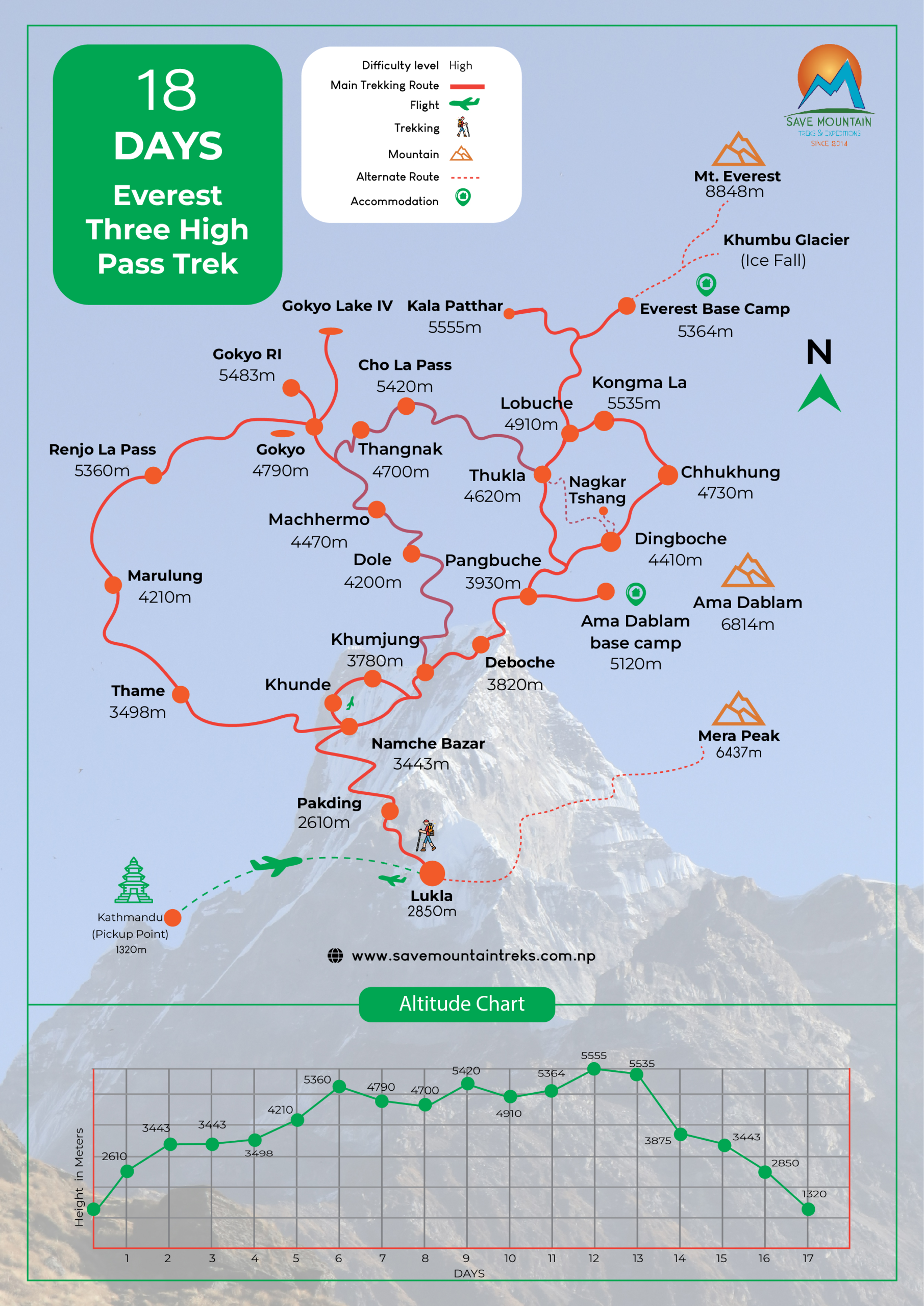
The trek typically lasts 18 days, with around 14-15 days of actual trekking. The rest includes rest days for acclimatization, travel, and flights to and from Lukla.
The trek is considered very challenging due to its high altitude, steep ascents and descents, long trekking days (5-8 hours daily), and crossing of three high mountain passes. It requires a good level of fitness and prior trekking experience at high altitudes.
Yes, prior trekking experience is recommended, especially at altitudes above 4000 meters. Trekkers should be familiar with multi-day hikes and be physically fit. Experience in high-altitude trekking or previous treks in Nepal, such as Annapurna Circuit or Langtang Trek, is beneficial.
The best times for this trek are spring (March to May) and autumn (September to November). These months offer the clearest weather, stable conditions, and breathtaking mountain views. Winter can be extremely cold, and summer/monsoon (June to August) brings heavy rainfall, making the trails slippery.
Each pass—Kongma La, Cho La, and Renjo La—is physically demanding, involving steep climbs and descents over rocky, sometimes icy terrain. The altitude adds to the difficulty, so proper acclimatization and a slow pace are key. Cho La Pass is known to be particularly challenging due to its glacial sections.
Yes, proper acclimatization is essential to prevent altitude sickness. Rest days are built into the itinerary at Namche Bazaar and Dingboche to help trekkers adjust to the high altitudes.
Accommodation is in teahouses (lodges) along the trekking route. These are basic but comfortable, offering meals, rooms with beds, and shared bathrooms. Facilities become more basic as you go higher, and heating is often only available in the dining area.
Key items include:
You need two main permits:
Training should focus on building endurance and strength. Activities like long-distance hiking, running, and stair-climbing are excellent for improving cardiovascular fitness. Carrying a weighted backpack on uphill walks is great for simulating trek conditions. It’s also recommended to practice hiking at high altitudes if possible.
Yes, comprehensive travel insurance that covers trekking at high altitudes (above 5,500 meters) is essential. It should also include coverage for emergency helicopter evacuation in case of altitude sickness or injury.
Booking Form